Through December 31, 2025, federal income tax credits are available to homeowners, that will allow up to $3,200 to lower the cost of energy efficient home upgrades by up to 30 percent..
Through December 31, 2025, federal income tax credits are available to homeowners, that will allow up to $3,200 to lower the cost of energy efficient home upgrades by up to 30 percent..
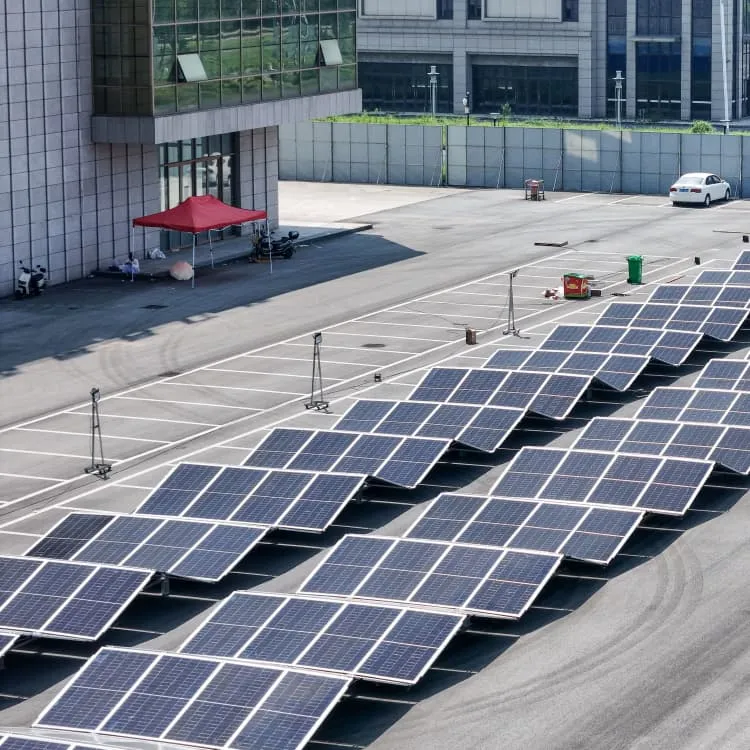
SAN FRANCISCO – The California Public Utilities Commission (CPUC) is launching a new $280 million statewide initiative to help California’s low-income utility customers install battery storage and solar panel systems. When combined with a federal tax credit, the program’s financial incentives are. .
There are federal tax credits available through the end of 2025 which empower Americans to make homes and buildings more energy-efficient to help reduce energy costs and demand. Through December 31, 2025, federal income tax credits are available to homeowners, that will allow up to $3,200 to lower. .
If you invest in renewable energy for your home such as solar, wind, geothermal, fuel cells or battery storage technology, you may qualify for an annual residential clean energy tax credit. The Residential Clean Energy Credit equals 30% of the costs of new, qualified clean energy property for your.
[PDF Version]
[2] 5G networks divide coverage areas into smaller zones called cells, enabling devices to connect to local base stations via radio. Each station connects to the broader telephone network and the Internet through high-speed optical fiber or wireless backhaul.Overview5G is the fifth generation of technology and the successor to . First deployed in 2019, its. .
In 2008, NASA and the conducted nanosatellite communication studies that influenced early next-generation network concepts. In 2012,. .
Small cells are low-power radio nodes that extend network capacity in dense or indoor areas. They operate over short distances, typically a few dozen to a few hundred metres, and are used to maintain coverage for mmWav.
[PDF Version]
5G is the fifth generation of technology and the successor to . First deployed in 2019, its technical standards are developed by the (3GPP) in cooperation with the ’s program. 5G networks divide coverage areas into smaller zones called cells, enabling devices to connect to local via radio. Each station connects to the broader and the
[PDF Version]
Will China build a 5G base station next year?
Technicians from China Mobile check a 5G base station in Tongling, Anhui province. [Photo by Guo Shining/For China Daily] China aims to build over 4.5 million 5G base stations next year and give more policy as well as financial support to foster industries that can define the next decade, the country's top industry regulator said on Friday.
Why are telecom companies installing indoor 5G base stations?
To solve this, telecom companies are installing indoor 5G base stations, which are growing at a compound annual growth rate (CAGR) of over 30%. For businesses operating in offices, malls, or large commercial spaces, installing indoor 5G solutions can greatly enhance connectivity.
Why is 5G better than 4G?
Because 5G operates at higher frequencies, it requires a much denser network of base stations. In urban environments, this means installing 10 times more base stations per square kilometer compared to 4G. This presents both opportunities and challenges. On one hand, denser networks lead to better speeds and connectivity.
How does 5G work?
5G networks divide coverage areas into smaller zones called cells, enabling devices to connect to local base stations via radio. Each station connects to the broader telephone network and the Internet through high-speed optical fiber or wireless backhaul.
In , operates in a flywheel storage power plant with 200 flywheels of 25 kWh capacity and 100 kW of power. Ganged together this gives 5 MWh capacity and 20 MW of power. The units operate at a peak speed at 15,000 rpm. The rotor flywheel consists of wound fibers which are filled with resin. The installation is intended primarily for frequency c.
[PDF Version]
The electricity sector of Uruguay has traditionally been based on domestic along with plants, and reliant on imports from and at times of peak demand. Investments in renewable energy sources such as and over the preceding 10 years allowed the country to cover 98% of its electricity needs with source.
[PDF Version]
Electricity can be stored directly for a short time in capacitors, somewhat longer electrochemically in , and much longer chemically (e.g. hydrogen), mechanically (e.g. pumped hydropower) or as heat. The first pumped hydroelectricity was constructed at the end of the 19th century around in Italy, Austria, and Switzerland. The technique rapidly expanded during the 196.
[PDF Version]